
Why Your Back Hurts After Long Drives
Common Causes
- Long sitting increases pressure on spinal discs
- Poor seat support strains the lower back and neck
- Limited movement reduces circulation and causes stiffness
- Tight hip muscles pull on the lower spine
- Slouched posture increases lumbar stress
- Road vibrations can irritate spinal nerves
- Existing issues like disc bulges or sciatica may worsen
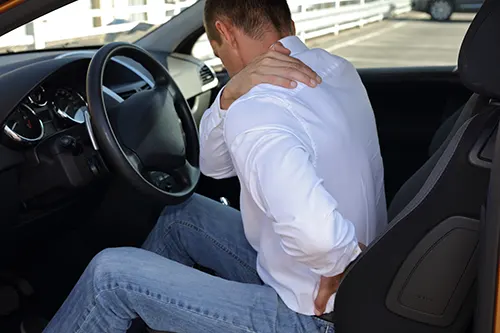
Long drives keep your spine locked in a seated position for extended periods, which naturally increases pressure on the lower back. When you’re not moving regularly, spinal discs are compressed for longer stretches of time, which can lead to irritation and discomfort. Over time, this pressure can build up and cause stiffness or aching once you finally get out of the car.
Posture also plays a big role. Many drivers tend to lean forward, round their shoulders, or sit without proper lumbar support. These positions shift stress onto the lower spine and surrounding muscles. Without proper alignment, the muscles in your back and hips begin to tighten, making it harder for your body to recover after the drive.
For individuals with pre-existing conditions like herniated discs, bulging discs, or sciatica, long periods of sitting can intensify symptoms. Nerves in the lower back may become more irritated, sometimes leading to radiating pain, tingling, or increased sensitivity after driving.
How Spinal Decompression Can Help
- Reduces pressure on compressed spinal discs
- Helps relieve nerve irritation caused by sitting
- Improves circulation and nutrient flow to spinal tissues
- Supports recovery from chronic lower back pain
- Non-surgical option for disc-related discomfort
Spinal decompression therapy works by gently stretching the spine in a controlled and precise way. This creates space between the vertebrae, which can help reduce pressure on discs that may have been compressed from long periods of sitting or driving. When pressure is reduced, it can also help take stress off irritated nerves in the lower back.
This process also encourages better circulation around the spinal discs. Improved blood flow allows oxygen and nutrients to reach areas that may be under strain, supporting the body’s natural healing process over time. For many patients, this can gradually reduce stiffness and improve overall mobility.
Another important benefit is nerve decompression. When spinal discs are compressed or misaligned, they can place pressure on nearby nerves, contributing to pain that may travel into the hips or legs. Spinal decompression helps create space in these areas, which may reduce that nerve-related discomfort.
At Ishitani Health Center, spinal decompression is often included as part of a broader treatment plan tailored to the patient’s specific condition. It is commonly recommended for individuals whose back pain is aggravated by long drives, prolonged sitting, or disc-related issues, especially when conservative care alone has not provided enough relief.
Contact Ishitani Health Center today!